
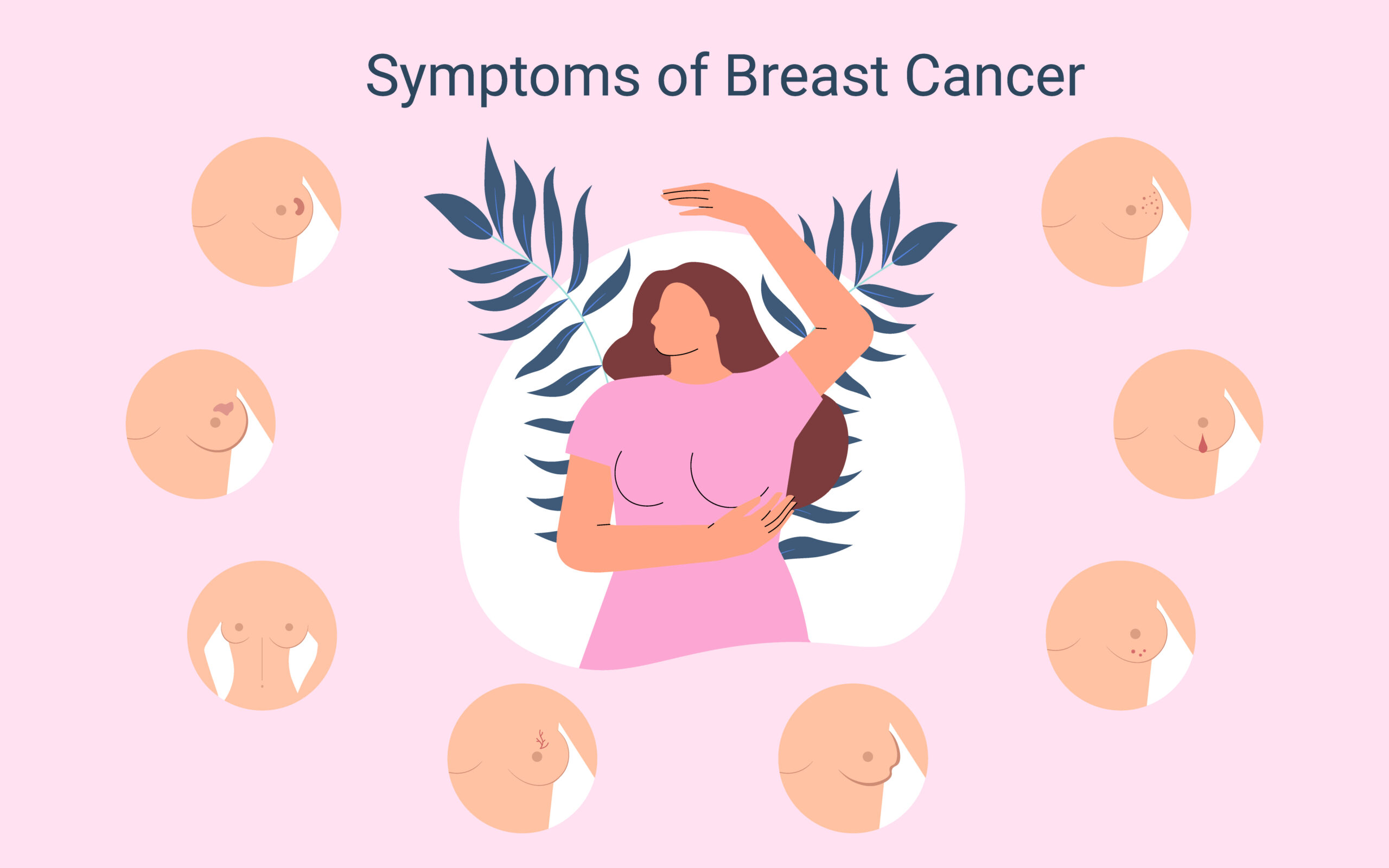
Breast cancer is one of the most common cancers among women in the US and worldwide. Knowing the early signs of breast cancer can help you find changes sooner. Early detection often leads to better outcomes. In this blog, we will explain the six main signs of breast cancer. We will also share tips on how to detect breast cancer and why breast health awareness is important for everyone.
1. Lump or Thickening in the Breast or Underarm
First, a lump or thick area in the breast or underarm is the most common sign of breast cancer. Most lumps are not cancer, but it is important to get them checked. Cancerous lumps are often hard, painless, and have uneven edges. However, some lumps can be soft or tender.
2. Change in Breast Size or Shape
Next, watch for any change in the size or shape of your breast. Sometimes, one breast may look larger or lower than the other. This change can happen slowly or quickly. Although many women have breasts of different sizes, a sudden change may be a sign of breast cancer.
3. Skin Changes on the Breast
Another sign is a change in the skin of your breast. For example, the skin may look red, dimpled, or thick like an orange peel. These changes can mean the cancer is blocking small lymph vessels in the skin.
4. Nipple Changes or Discharge
Sometimes, breast cancer can cause changes in the nipple. For instance, the nipple may turn inward (invert), become sore, or change position. In addition, you may notice discharge from the nipple that is not breast milk. This discharge can be clear, bloody, or another color.
5. Pain in the Breast or Nipple
Breast pain is common and often not linked to cancer. However, ongoing pain in one spot that does not go away can be a sign of breast cancer. This pain may feel sharp, burning, or tender.
6. Swelling or Lump in the Underarm Area
Finally, swelling or a lump in the underarm (armpit) area can be a sign of breast cancer. This may mean the cancer has spread to nearby lymph nodes. Sometimes, this is the first sign before any changes in the breast itself.
The Importance of Early Detection
Early detection of breast cancer saves lives. According to the CDC, finding breast cancer early can make treatment easier and more successful. Regular self-exams, mammograms, and knowing the signs of breast cancer are important steps. In the US, breast health awareness campaigns encourage women to check their breasts every month.
If you notice any of these signs, do not wait. Consult Dr. Rashmi Pradhan if you notice any of these signs for personalized advice.